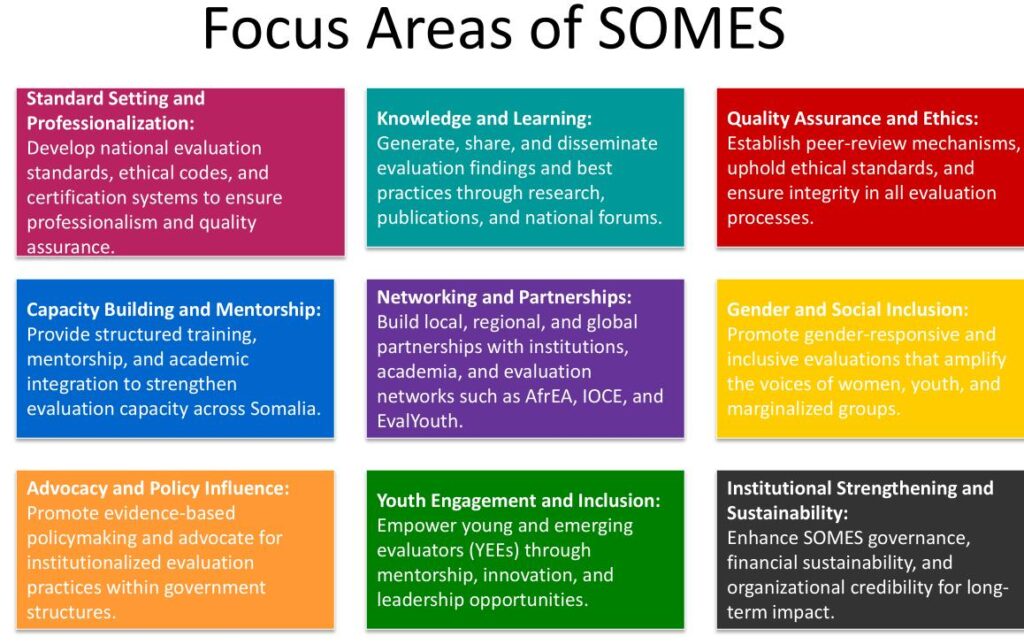
Want To Know More About Us?
Somalia Evaluation Society
Somalia is undergoing significant progress in state-building and institutional development. Although the country has a pool of skilled professionals capable of conducting credible evaluations, it has long lacked a formal professional body to unify and strengthen the evaluation community. Establishing such a body is essential for coordinating national evaluations, assessing sector-wide progress, and measuring the impact of programs implemented by UN agencies, NGOs, and government institutions.
In recent years, the demand for evaluations has increased more rapidly than the availability of local expertise. The absence of a structured mechanism for evaluators to collaborate, uphold professional standards, offer peer support, and mentor emerging practitioners has created notable gaps. Consequently, most evaluations remain small-scale, project-specific, and donor-driven, with limited systematic integration of findings into national policy and budgetary decision-making. This has contributed to a fragmented evaluation landscape.
A 2023 UNICEF-funded Evaluation Landscape Analysis highlighted the limited presence and influence of Voluntary Organizations for Professional Evaluation (VOPEs) in Somalia. In response to these gaps and to strengthen national coordination the Somali Evaluation Society (SOMES) has been established as an independent, national professional evaluation body dedicated to advancing evaluation practice across the country.
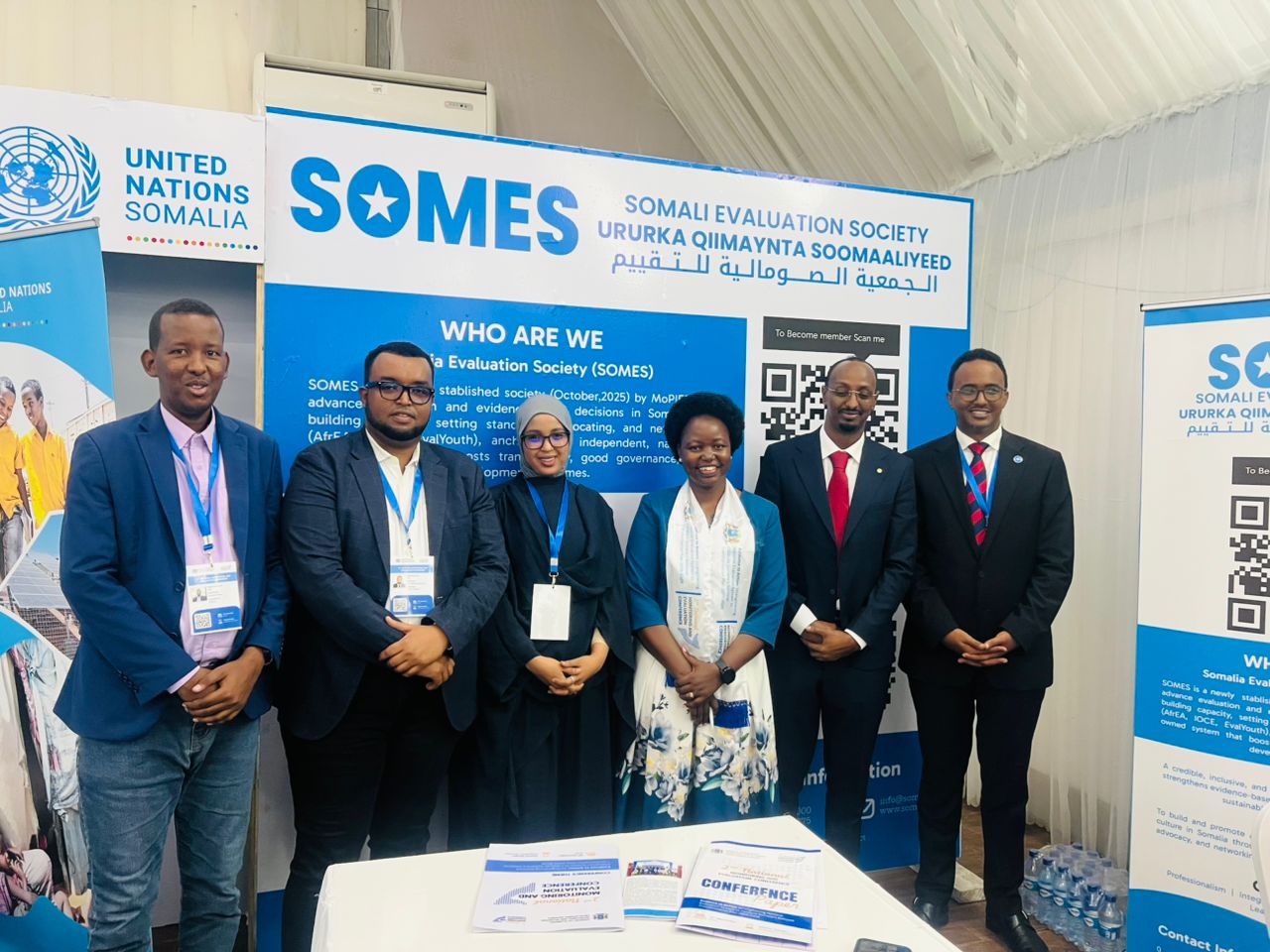
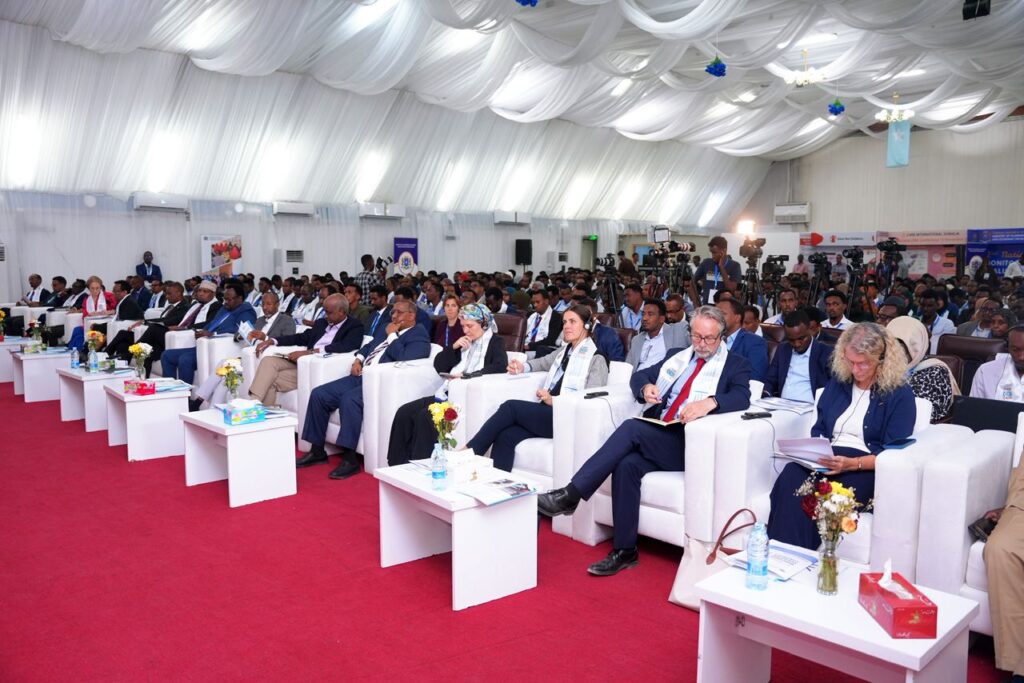
NATIONAL M & E CONFERENCE
- Accountability & Transparency
- Integrity, Independence & Ethics
- Evidence Use & Continuous Learning
- Professionalism, Competence & Youth Development
- Inclusivity & Cultural Sensitivity
- Collaboration & Partnership
The Rationale behind Establishment of SOMES
We, the Somalia Evaluation Society (SOMES) are a newly established professional body that
seeks to strengthen evaluation practice and promote a culture of evidence-based decision-making
in Somalia.
Institutional Gap
Somalia lacked a legally recognized professional body for evaluators. This absence has led to weak coordination, inconsistent standards, and limited visibility of evaluation activities across the country.
Capacity Gap
Although universities and public institutions produce graduates with foundational knowledge in Monitoring and Evaluation (M&E), there are no structured professional frameworks for training, mentoring, or certifying evaluators.
Policy Gap
Evidence generated through evaluations is often underutilized by policymakers and decision-makers. This underuse undermines accountability to citizens, government entities, development partners, and funders, while reducing the efficiency and effectiveness of resource allocation and program implementation.
Youth Engagement Gap
There is no established pathway to support youth and emerging evaluators (YEEs) in contributing meaningfully to the evaluation field or advancing professionally within it.
Regional Integration Gap
Somalia currently lacks representation in regional and global evaluation networks such as the African Evaluation Association (AfrEA), EvalYouth (Global Network of Young Evaluators), and the International Organization for Cooperation in Evaluation (IOCE). As a result, Somali evaluators miss opportunities for peer learning, collaboration, and increased international visibility
Somalia Evaluation Society